


History
The Unity Street site was once home to Gardiner Haskins, a household name in Bristol for over a century. Established in the late 19th century, the business grew from an ironmongery into a large department store, occupying multiple warehouse-style buildings across the city. The Unity Street premises served as part of this commercial estate but were eventually vacated as retail operations were consolidated. Left derelict for years, the buildings became unsafe and prone to fly-tipping, attracting planning requirements for careful redevelopment. The clearance of these structures marked the first step in reimagining the site for modern use while respecting its historic character.
Project Overview
Weaver’s works encompassed a broad enabling package that balanced demolition with sensitive retention:
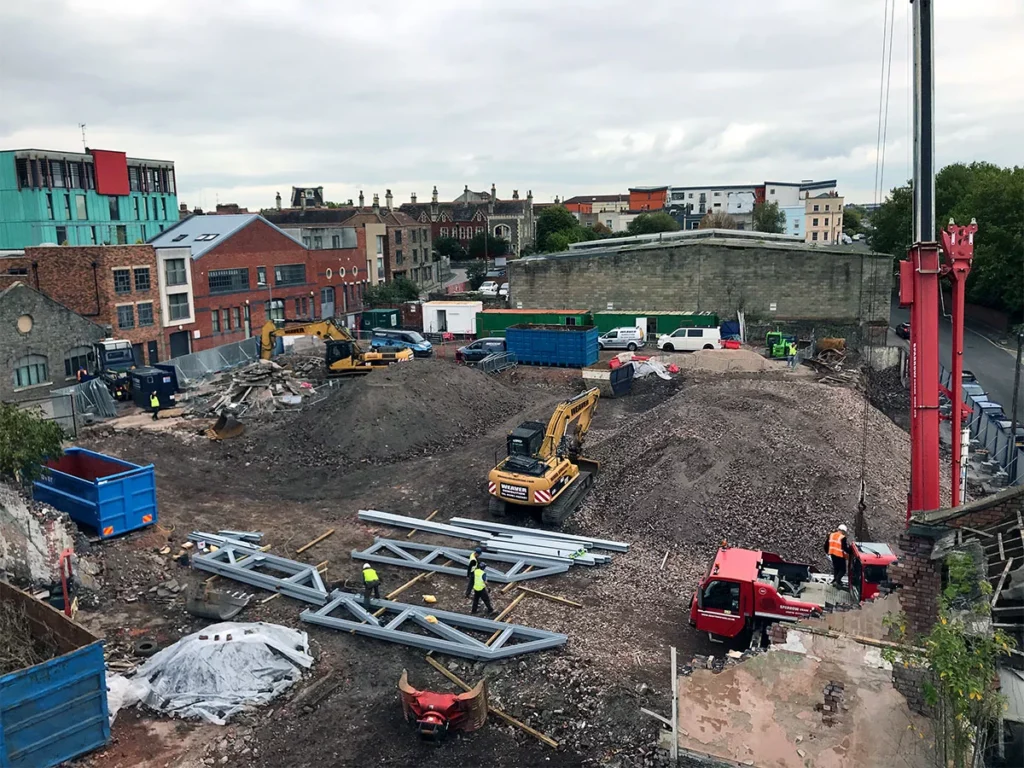
- Site Clearance: The project began with the removal of accumulated waste, fly-tipped materials, and overgrown vegetation, ensuring safe access for operatives and machinery.
- Asbestos Removal: Licensed and non-licensed asbestos was carefully removed by qualified operatives to make the site safe for further works.
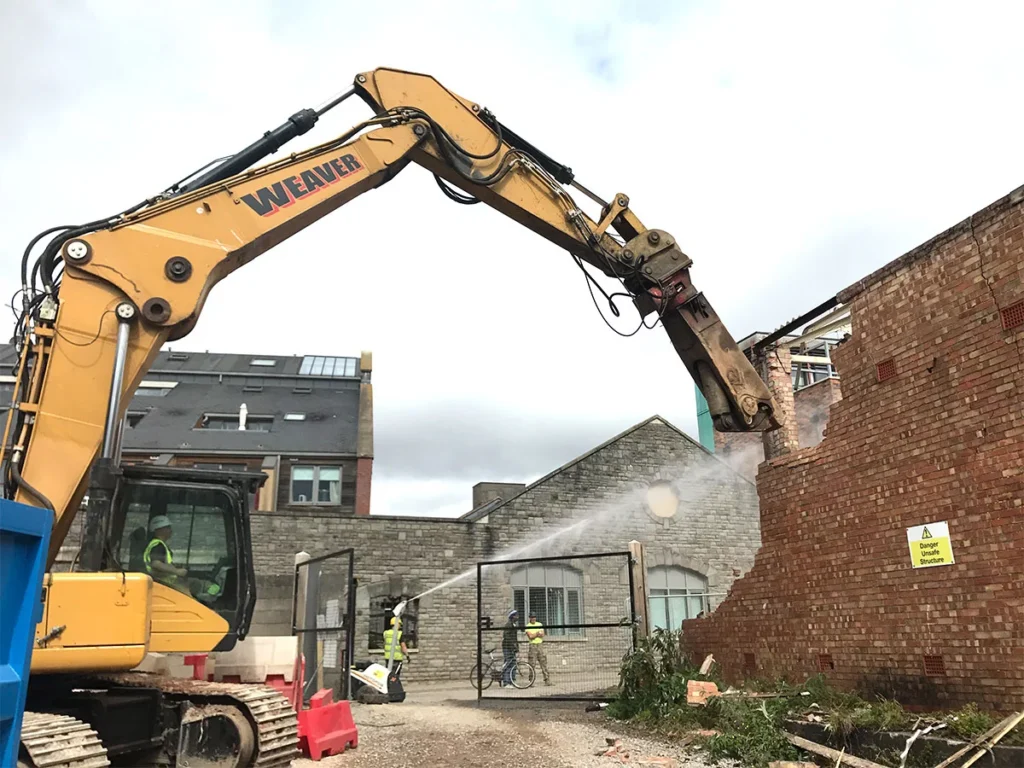
- Controlled Demolition: Unsafe and redundant buildings were demolished using a combination of mechanical and hand methods, ensuring public safety and protecting adjacent structures.
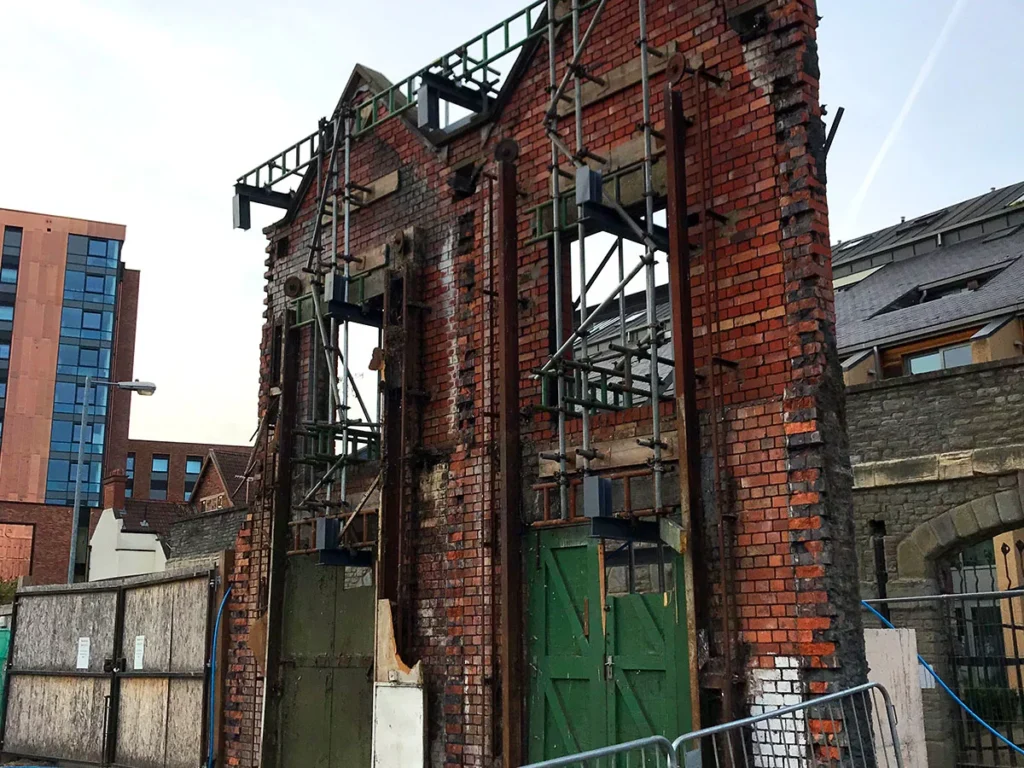
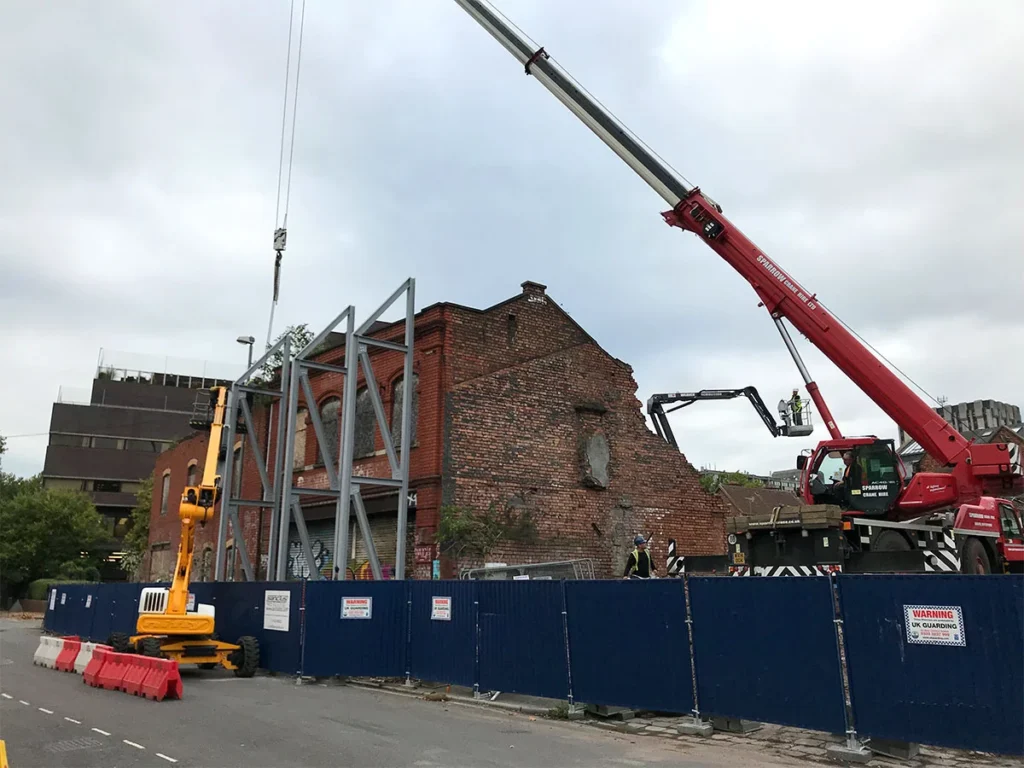
- Façade Retention: Planning conditions required the preservation of the two extremities of a key building. Weaver designed and installed a bespoke façade retention system to support these walls while adjoining structures were demolished.
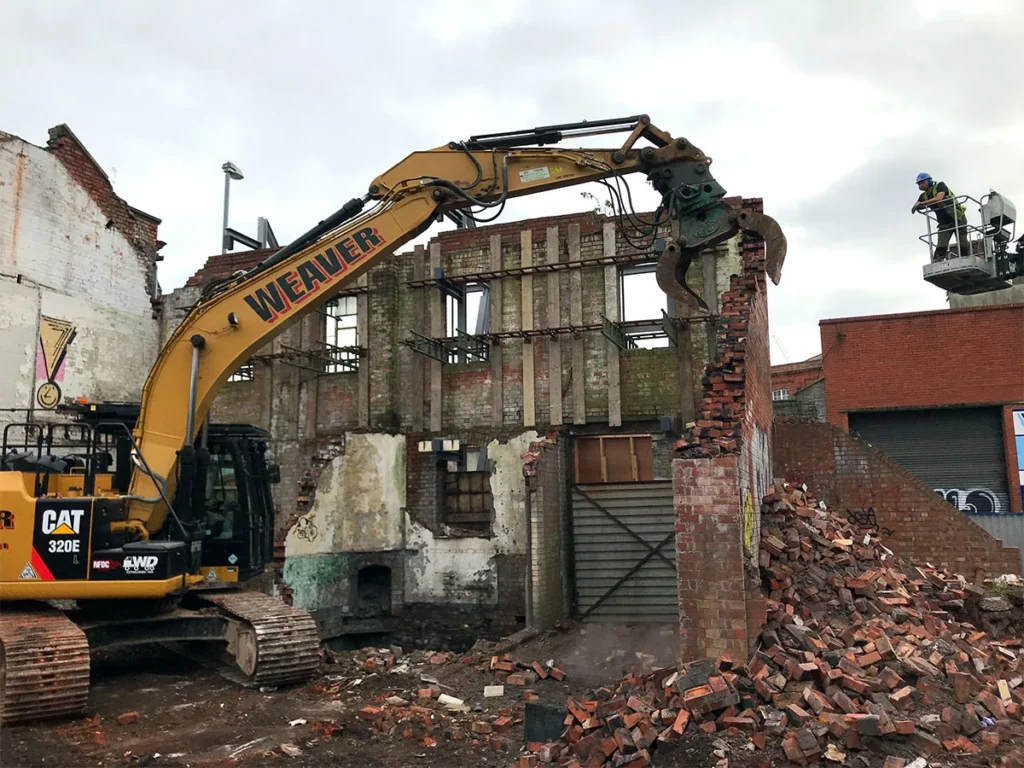
- Structural Demolition: Internal sections of buildings were taken down in a phased sequence, with materials carefully segregated.
- Hardstanding and Foundations: All slabs and below-ground obstructions were broken out and removed to leave a clear and level site.
- On-Site Crushing: Hardcore arisings were processed into 6F2 aggregate, stockpiled for reuse in the redevelopment phase.
Project Requirements
The client required Weaver to deliver a safe, efficient, and planning-compliant clearance package:
- Address safety risks posed by derelict and unstable structures.
- Preserve heritage elements through the retention of key façades.
- Work in a constrained city-centre environment, requiring robust traffic management and neighbour liaison.
- Deliver within a fixed 12-week programme to align with redevelopment timescales.
Environmental Impact
Sustainability was prioritised at every stage:
- High Recycling Rates: On-site crushing ensured maximum reuse of concrete and hardcore, reducing the need for imported materials.
- Reduced Vehicle Movements: By processing materials on site, Weaver cut down on lorry journeys, reducing noise, congestion, and carbon emissions.
- Waste Segregation: All recyclable materials, including metals and timber, were separated and sent for reprocessing.
- Heritage Retention: By preserving parts of the original façade, the project reduced demolition waste and maintained a visible link to the site’s history.
Key Benefits to the Client
Weaver’s delivery provided the client with a range of benefits:
- Programme Certainty: The site was cleared and prepared within the agreed 12-week window, enabling redevelopment to proceed on schedule.
- Compliance with Planning: Façade retention met local authority requirements and safeguarded the site’s historic character.
- Reduced Risk: Asbestos and unstable structures were safely removed, de-risking the site for future contractors.
- Sustainability Gains: Recycling and reuse measures reduced both cost and environmental impact.
Project Summary
Over a 12-week programme, Weaver Demolition transformed the derelict Gardiner Haskins site at Unity Street into a safe, clear, and construction-ready platform for redevelopment. Works included asbestos removal, controlled demolition, bespoke façade retention, and sustainable material recycling. By combining technical capability with heritage sensitivity and environmental responsibility, Weaver delivered a project that balanced safety, compliance, and efficiency — setting the stage for the next chapter in the long history of this central Bristol site.